I am human. I fawn over the language we’ve developed and the music we have written. Our artistic talent and physical prowess flabbergast me. The great architecture of this world, houses our worldwide society that endures much: through wars and pestilence, ignorance and prejudice, we manage to forge this world with labors and irons. Sometimes society has been dark and gruesome, sometimes enlightened and beautiful. We operate under those precious, shared weaknesses immortalized by Shakespeare’s Shylock (If you prick me, do I not bleed?). And I, being no less a Jew in the American-Christendom than Shylock, understand without brevity the biological similarities between the reader, his or her best friend, their cousins, enemies and distant acquaintances. There is sophisticated elegance to the scientific notion of our commonality: common descent, common susceptibilities and strengths, and shared morality, but this does not stop at our species. The real test of the human spirit may be to realize it is not human at all. Our spirit must be, despite what we see or hear as differences, the same spirit that beams dynamically in all forms of life—human, animal, and plant.
Let us admit something to ourselves: we are a proud race of beings, which have accomplished much, and have grandeur amongst this planet’s other inhabitants. But we are still coarse beings. We are coarse because the tools we develop falter, our vision obscures, and our hearing fails us. Even our minds, capable as they may be, do not know the whole of even one particular field, not in mathematics or science or language. We do not have any perfect truths, or complete facts of how we have arrived, and especially of where we are headed socially, economically, or evolutionarily. We are coarse because we are of little account to this universe, which would function unaffectedly in our absence. Our unique, human history is nothing more than trivial; the universe is less affected by our actions than a single period affects the end of any sentence that I have ever written. I will go so far to say that human history cannot even be represented by the missing cross of a single “t” in all of written literature.
In the wake of such a stupefying suggestion, what are we humans left with? All of earth and its inhabitants. This must be enough for our vanity. This must satiate our materialism. Let it be stated: I live like a King! I travel from castle to castle, feasting at the smallest whims of my culinary desires. I play tennis, like monarchs and royalty before me, whenever the mood strikes or the delightful weather beckons. My studies feel optional; there's no urgency for proficiency. Not even time, the fire in which we all burn, rushes me. This is the spring of a life that has the genetic disposition and nutritional resources to become a centenarian. But even if I live two hundred years of enviable comfort, what will define my existence as a member of this third rock from the sun? What, considering that I have discredited all human achievement as universally insignificant, is worth living for?

[v]
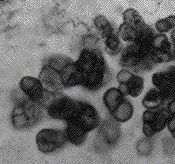
Pictured above: Simple, single- celled bacteria (life) dating back 3.5 billion years
Something is worth living for, or life wouldn't exist, and the elements that assembled and allotted life eons ago would have been bits of shapeless nothings traveling throughout the universe. But life, for reasons that remain quite mysterious, exists. And not only does life exist, but it fights. In what scientists estimate to be close to two billion years, life's complexity intensified, producing the known biodiversity of our planet. Life appears to be continually reinventing itself. The journey from amoebas to Homo sapien is a testament to our life forces' spectacular will, and it is likely that if life on Earth fails, somewhere in the vastness of space, another planet is conceivably on a similarly paved road. There are frozen signs of ancient, microscopic life embedded in the ice sheets of Europa, Jupiter's moon, and on Mars. As a merchant of Venice once said,
“No matter how we catch it, find it, or come by it...Whatever [life] is made of, whereof it is born, we are of it.” [i]
Matter, living and nonliving, is comprised of 92 fundamental and naturally occurring elements. These elements assemble the animal and plant organisms that fight desperately for an infinitesimal crevice of the universe, that change and adapt at the microscopic level to increase their chances of survival, and have evolved into the distinguished, distant relatives of man.
 [vi]
[vi]
Pictured above: The hand with a wheel on the palm symbolizes the Jain Vow of Ahimsa. The word in the middle is "ahimsa". The hand and wheel represent the resolve to halt the cycle of reincarnation through relentless pursuit of truth and non-violence.
That is why the Jain (practitioners of an ancient Indian religion) revere all life, even insects and individual blades of grass. The Jain attempt to annihilate their human and animal-selves, one step farther than Derrida, a French philosopher, asks, and thus connect themselves to the universal, sentient life force. “This sentiment of tenderness, for those of the sentient lower creatures, [is] an element in the spiritual life.” [ii] Without a self, without the hubris of human desires for material things-or even the animalistic inclinations to dominate, acquire territory, and kill for food-the elegance of life, the magnificence, the feeling of love and horripilation and the perfect, wordless poem of the universe become interlaced in your physical and mental self, a stitching of which is all “gash, gold-vermilion.” [iii] Only then will human evil tame and harmony may “father-forth [with a] beauty [that] is past change.” [iv]
I am the world's most poorly executed Jain. This is what I shall do: love the earth, the sun and the animals. That is what I shall do... That is what I shall do.
[i] William Shakespeare, The Merchant of Venice, Animal Humanities Anthology, pg. 255.
[ii] Harriet Ritvo, The Animal Estate, Animal Humanities Anthology, pg. 390.
[iii] Gerard Hopkins, The Windhover, Animal Humanities Anthology, pg. 376.
[iv] Gerard Hopkins, Pied Beauty, Animal Humanities Anthology, pg. 377.
[v] http://www.blackwellpublishing.com/ridley/images/bacteria.jpg
[vi] http://wpcontent.answers.com/wikipedia/commons/thumb/4/40/Jain_hand.svg/216px-Jain_hand.svg.png

No comments:
Post a Comment